HomeNewsNewsletterJanuary Newsletter: “Too much power and too many assets in too few market participants”
January Newsletter: “Too much power and too many assets in too few market participants”
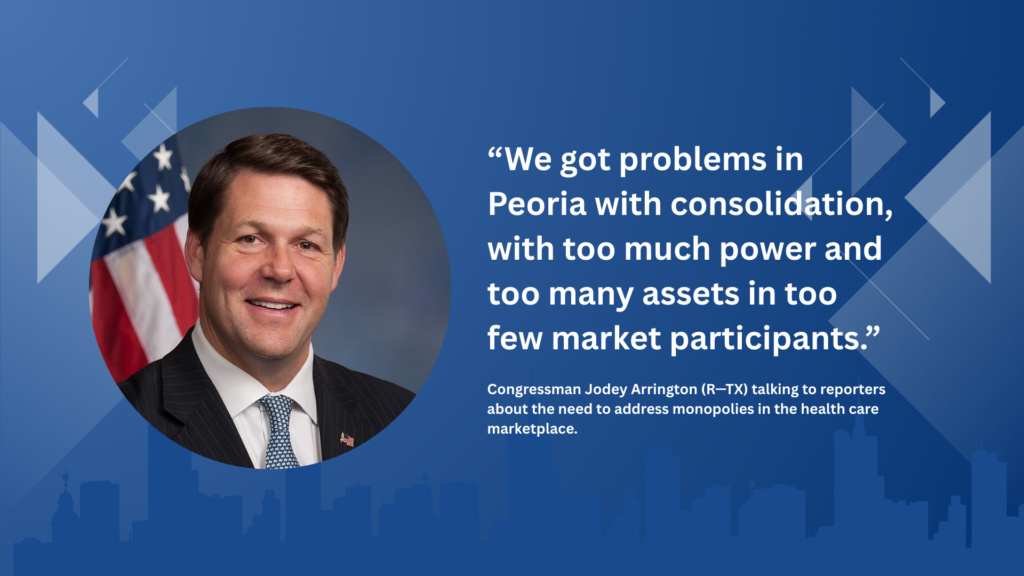
Congressman Jodey Arrington (R-TX) recently spoke with reporters about the growing bipartisan consensus in Washington around the need to take action to address market consolidation and anti-competitive business practices in health care markets.
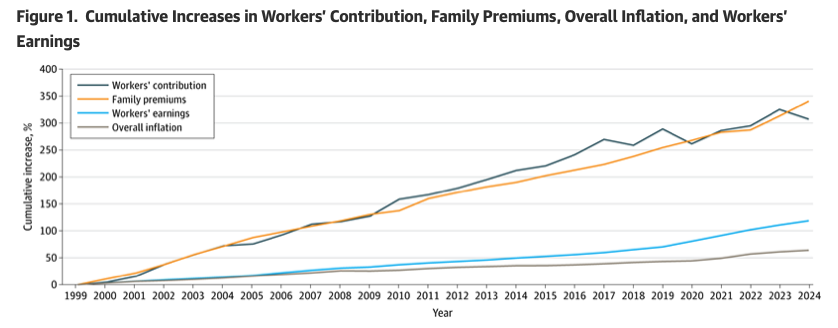
JAMA: US Medical Prices and Health Insurance Premiums, 1999-2024
A new economic evaluation found that insurance premiums have increased at 3 times the rate of workers’ earnings since 1999, accompanied by escalating hospital prices.
Employer Health Costs: Amid Continual Increases the Cost of Doing Nothing is Too High
Given the fiercely-held interests of pharmaceutical companies and pharmacy benefits managers, it’s unlikely that medication prices will decline. That leaves companies with one dominant tool to calm the crisis: cost containment through more engaged care and condition management.
Economic research shows that consolidation among hospitals and health systems has given providers unprecedented market power to set prices above competitive levels
Hospital acquisition of physician practices tied to higher costs
A review of multiple studies shows hospital acquisitions are associated with average price increases of 14%, with some markets experiencing increases up to 33%. Nearly half of these increases stem from reimbursement policies that favor hospital-owned facilities, which can bill higher facility fees for procedures formerly delivered in office settings.